
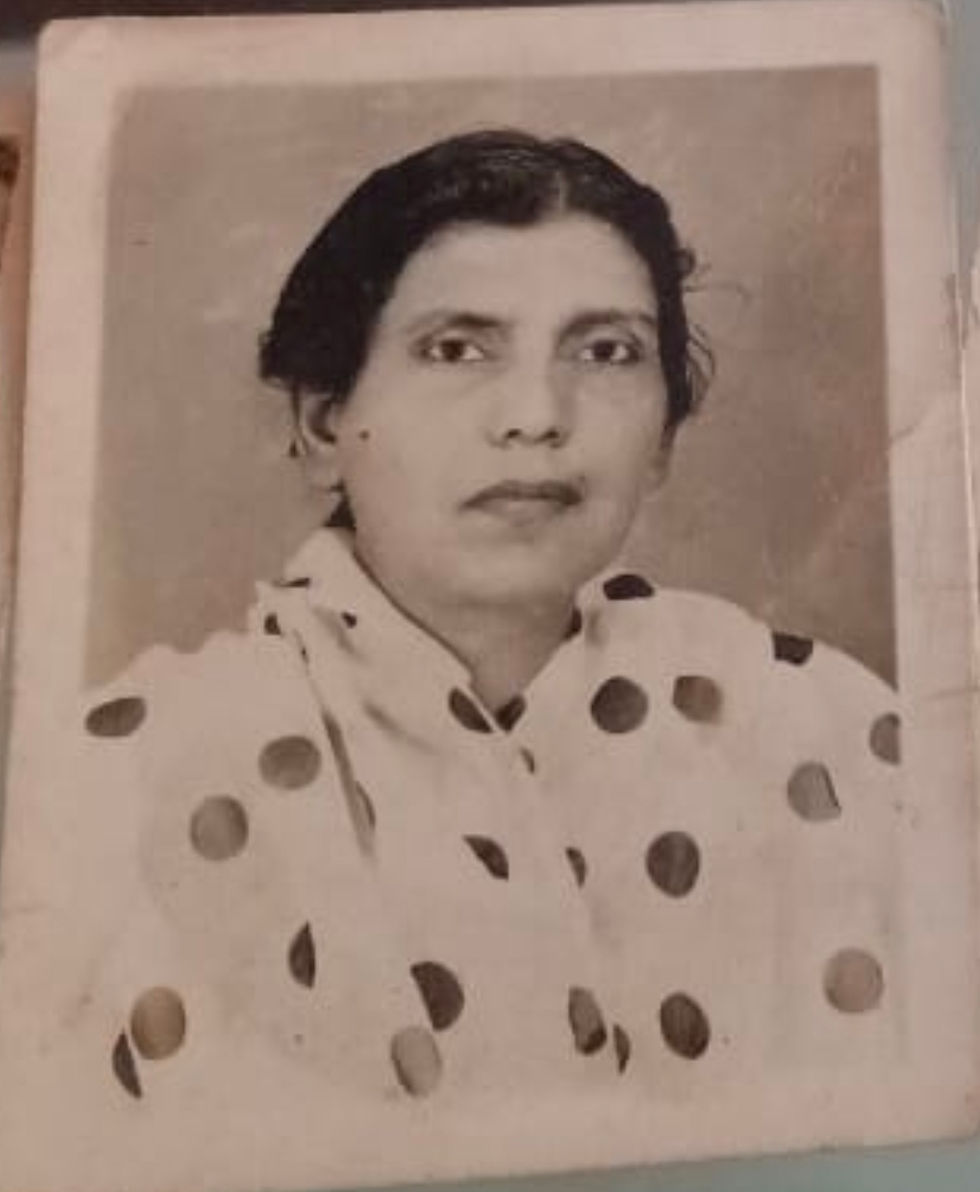
Amma
Amma was the only grandparent we knew. My father’s parents died before he went to high school. My mother’s father died when my naani - my Amma - was in her early thirties. She never married again.
Amma built her two-storey home in Patna with the savings she had. A part of it was rented out - that rent along with the government pension she received, sponsored her children’s education and eventually, their marriage.
My earliest memories of Amma ka ghar are of the two-storey house in a narrow gali in Subzibaagh, Patna. I loved how its balcony overlooked the entire lane. We visited Patna every other summer. My cousins and I would run up and down the stairs, the sweltering June heat never bothering us. The house hosted visitors all day long. I remember laughter. Lots of it.
Most people gathered on the huge double bed she had downstairs, with a sethi on one side. The ground floor was where the action usually happened. The upstairs, though, always felt like the place where serious things took place. The veranda had a few chairs where people sat and talked - the serious conversations, I assume.
And there was one chair upstairs I remember distinctly: a dark wood armchair with plastic twine woven along the entire length of its seat and back. I was smitten with it, especially because, as a Gulf kid, I was used to boxy, soft cushioned sofas. Back then, importing real wooden furniture from India felt like a luxury. It probably still is.
But the thing is, despite the house being built and held together by my grandmother, I rarely saw her sit in that chair. It was almost always occupied by important-looking men - her younger brother, or her sons-in-law. Never her.
Somehow, now, whenever I imagine that chair, I imagine it as barren. Empty. Because, I guess, if my Amma never really sat in it…
*********
Objects of Our Affection is a series exploring our connections to the furniture and objects that make our spaces home. Through stories of tables, chairs, and that odd-shaped thing only you love, we celebrate the inanimate pieces that hold memory and witness our lives.
If you'd like to contribute your own story to this series, we'd love to hear from you. Micro-essays, poems, reflections, and fragments welcome. Write to us at hellothadi@gmail.com. Word limit 400.




Comments